



News & Articles
Dementia: The Second-Class Citizen Scandal

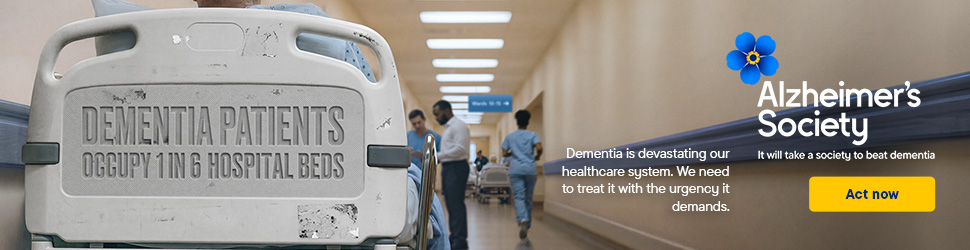
A recent newspaper headline suggested that people living with dementia(PLWD) are being treated like second-class citizens. Sadly, I believe there is truth in that statement.
https://www.dailymail.com/health/article-15944087/NHS-dementia-patients-second-class-citizens.html
But I also believe it doesn't go far enough.
The inequality experienced by PLWD is woven throughout government policy, our health and social care systems, and society itself. Despite dementia being the UK's leading cause of death, too many people continue to face a journey marked by uncertainty, fragmented support and an exhausting battle to access the care and support they deserve.
Receiving a diagnosis is important. It provides answers, helps families understand what lies ahead and may, for some, create opportunities to access emerging treatments.
But diagnosis neither cares nor supports. The diagnosis should be the beginning of a journey of support, not the end of one.
Too often, families leave the clinic carrying little more than a leaflet, only to find themselves trying to navigate an incredibly complex world of assessments, funding, waiting lists and services that often fail to join up,many of which lack the specialist knowledge and expertise that PLWD and their families desperately need. Instead of spending precious time making memories with the person they love, they find themselves becoming administrators,advocates, unpaid carers and care coordinators.
I am witnessing this first hand through two of my closest friends, aged66 and 71, both recently diagnosed with Alzheimer's disease. One lives in the United Kingdom and the other in the United States, yet their families are facing remarkably similar struggles. Their spouses are trying to navigate complex systems while searching for long-term care solutions, practical support and financial security. The emotional and financial burden on them and millions of people like them around the world is immense.
In the UK alone, dementia is estimated to cost around £42 billion each year, with the majority of that cost falling on PLWD and their families. Those figures are staggering, but that fails to tell the real story.
It does not measure the partner who quietly gives up retirement plans because they can no longer leave their spouse alone. They do not measure the person who has not enjoyed an uninterrupted night's sleep for months because they are being continuously woken. They do not measure the family who reduce their working hours, or those who sacrifice their own well-being, or the grandchildren who watch family life gradually become centred around appointments, crises and worry. These are the invisible costs of dementia, too often left unspoken because we have a painfully inadequate system of support.
Without substantial financial resources or expensive insurance policies,families in both countries find themselves living beneath a cloud of uncertainty, desperately trying to do the very best for someone they love while receiving nowhere near the level of support they need. This is one of the reasons people living with dementia can feel like second-class citizens: they do not receive the same urgency, coordination or properly funded support that is often associated with other major health conditions, such as cancer or heart disease.
As someone who has spent almost four decades working alongside PLWD, I know that the greatest difference comes from people. It comes from relationships, familiarity, kindness and trust.
For families, having a knowledgeable advocate who can navigate complex health and social care systems, coordinate support and shoulder some of the administrative burden would be an enormous relief. They need services continuity, specialist expertise and the flexibility to respond as dementia progresses, allowing families to remain families rather than becoming full-time carers and case managers.
Instead, too many families are trying to cope within a system that has gradually withdrawn some of the very services designed to support them. Adult day centres in England fell by 41% between 2010 and 2018, removing vital places of connection, routine and respite for thousands of people. Alzheimer's Society continues to call for improved access to specialist dementia respite care,recognising that too many unpaid carers are unable to get the breaks they desperately need. These are not luxury services; they are essential life lines that help families continue caring and enable PLWD to remain active, connected and engaged in their communities.
As those services disappear, the burden does not disappear with them. It is simply transferred to husbands, wives, sons, daughters and grandchildren. Families quietly reduce their working hours, sacrifice their own health and wellbeing, postpone retirement and shoulder responsibilities that no family should be expected to carry alone. Today, unpaid family carers provide care valued at around £21 billion every year in the UK. They have become the invisible backbone of our dementia care system.
We cannot continue to talk about helping people to live well with dementia while simultaneously allowing the services that make living well possible to diminish. Day opportunities, meaningful respite, specialist support and skilled dementia care are not optional extras; they are fundamental to enabling people to continue living lives filled with meaning and purpose.
If we truly want to improve the lives of PLWD, we must stop judging success solely by service compliance. The real measure of success is whether PLWD—and those who love them—receive the responsive, compassionate and expert support they need to continue living lives of meaning, purpose and dignity. Until that becomes the measure by which we judge our system, we will continue to mistake compliance for excellence.
Kevin Hewlett MBE MSc (Dementia) kevin.hewlett@haleplace.co.uk

Hale Place Care Solutions
79 Old Road, East Peckham
Tonbridge
Kent
TN12 5EN