



News & Articles
What Personalised Dementia Care Should Actually Look Like

I wrote a guest column recently that I want to share here too, because it's something I feel strongly about. It's about the gap between how we talk about personalised care, and what actually happens on an ordinary Tuesday morning.
When we talk to friends or family about our own day, we don't usually mention that we had a wash, got dressed, ate breakfast, or took our medication. We don't centre conversations around that, because frankly, it would send people to sleep. Those are just the everyday things that keep us going.
What we do talk about are the things that stirred something in us. The walk we went on. The place we visited. The meal with friends. The match on TV, or the pub banter, or something a child said that made us laugh. We remember these things because they made us feel something. That's real life: human, messy, funny, irritating, emotional, unpredictable, and occasionally ridiculous.
That's why I think we need to rethink how we talk about dementia care. Keeping people safe, clean, fed, hydrated and free from pain matters enormously. But it isn't life itself. It's the foundation life should be built on.
Where personalisation actually begins
Personalisation starts within the everyday moments. Did the person get up when they wanted to? Did they choose their breakfast, their clothes, or where they wanted to sit? Was there conversation while somebody helped them dress, or was the task simply completed around them? Were they given time to do what they could for themselves, or was it quicker for somebody else to just do it? These sound like small things, but this is exactly where personalisation either begins, or quietly disappears.
And then, what happened to the rest of their day? Did they get outside, visit the shops, stop for a coffee, or chat with someone they knew? Did they have real opportunities to stay part of the world beyond the front door?
A recent BBC story about the actor Peter Marinker stuck with me. Ahead of his September performances of Samuel Beckett's Krapp's Last Tape, the BBC described how the 85-year-old, who has Alzheimer's, was preparing for a one-man show. That would scare the life out of me. But the response to the difficulties he was experiencing wasn't to stop him. It was to work out what support would help him carry on.
Extra rehearsal time. Autocue screens. An earpiece for prompts. A stage manager close by. Nobody pretended Alzheimer's had made no difference. The production was adapted around him, so he could keep doing something that mattered to him. Reading that, I kept coming back to one question: how do we help Peter carry on being Peter?
That question belongs just as much beside a care-home armchair as it does on a London stage. Someone who wants to potter in the garden, help prepare lunch, or watch the match with someone who shares their enthusiasm deserves the same willingness to find a way. It doesn't need to be extraordinary to matter.
The gap between the words and the reality
I'll be honest: I've grown tired of hearing the familiar language. The person comes first. Care is personalised. Everything we do is centred around the individual. We've written it in policies, printed it in brochures, repeated it at conferences, for years. And yet in everyday care, the reality too often bears little resemblance to the words.
This isn't just my frustration. The CQC's 2025 dementia report identified gaps in staff understanding of people's individual needs, including in care homes that didn't always support wellbeing. The MARQUE study, which surveyed over 1,500 staff across 92 English care homes in 2018, found that over a third reported almost never seeing or arranging an outing purely for a resident's enjoyment, and 15% said the same about an activity built around someone's actual interests. Those are older figures now, but from what I've seen, I'm not confident things have improved. In some places, I suspect they've got worse.
On one visit to a gentleman in his nineties, I walked the full length of a corridor to reach his room, the last one along. Every bedroom door was propped open, the televisions were on, and each person sat alone. The communal lounge was empty. It was eleven in the morning, and I didn't see a single staff member. I saw the same scene on later visits too. The home proudly displayed its "Good" rating. I couldn't help asking myself: good enough for whom?
Perhaps some of those residents genuinely preferred their mornings quiet and alone. But had anyone actually asked them? Had they been offered something they wanted to do, with the support to do it? Or had being left alone simply become the routine, because it was easier?
Before any of us describe our own care as personalised, including me, it's worth asking an uncomfortable question: if somebody walked around our home at 11am tomorrow, unannounced, what personalisation could we actually point to?
What personalisation looks like for someone who can't tell you directly
This matters just as much for people who can no longer say clearly what they want. A look, a gesture, a smile, turning away, becoming absorbed in something, these can tell us a great deal about someone's preferences. It takes familiarity, patience and real attention to notice and respond to them. Difficulty expressing a wish should make us work harder to understand it, not make it easier to overlook.
And someone's life history shouldn't become a rigid set of instructions either. A person who once loved gardening might want something different now. As dementia progresses, what someone enjoys and how long they can concentrate for can change. Their history should help us understand them, while leaving us open to what matters to them today.
People are allowed to change their mind, refuse an activity, or simply enjoy a quiet afternoon. We're supporting someone's life, not staging a performance of how busy and cheerful we think they ought to look. Sitting someone in the corner of an activity they've shown no interest in isn't the same as them taking part in it, even if the record says "attended."
Why this is so hard to actually deliver
Genuine personalisation needs the one thing care services so often struggle to protect: time. Time to properly know someone. Time to help them do things for themselves rather than doing it for them because it's quicker. Time to respond when what someone wants doesn't fit the plan for the day.
It also needs competent staff, supportive leadership, and a provider willing to organise the service around people's lives rather than the other way round. More staff alone can't fix an inflexible culture. But good intentions alone can't conjure up an extra pair of hands either.
There's real evidence that investing in this properly makes a difference. The WHELD trial, involving 847 people with dementia across 69 UK care homes over nine months, combined staff training, personalised activities, social interaction and a review of antipsychotic medication use. It produced measurable improvements in quality of life and real reductions in agitation, compared with usual care, and its economic analysis found it saved money too. Better support takes resources. But poor support carries its own cost, just a human one rather than a financial one.
The honest question about money
Care homes don't all have the same resources available. Knight Frank's 2025 review, covering around a fifth of UK care home beds, found that larger care businesses were typically running surpluses of around 30%, before rent, financing and other costs. Smaller homes, and those funded mainly through local authorities, had considerably less room.
So the real question isn't whether money exists. It's how much of it, where it does exist, actually turns into the staff time residents need. And where commissioners expect personalised support, does the funding genuinely allow for it? It's easy to write choice and independence into a service specification. Somebody still has to fund the time it takes to make those words mean something on a wet Tuesday afternoon.
If that makes us uncomfortable, I think that's a good thing. But the responsibility has to sit where the decisions are actually made. Providers need to look honestly at what their staffing and routines really allow for. Commissioners need to face the practical consequences of their funding decisions. Regulators need to test whether what's written in a care plan is recognisable in someone's actual day. And staff need the training, support and flexibility to respond to the individual in front of them, even when that means putting the routine down for a while.
What this looks like day to day
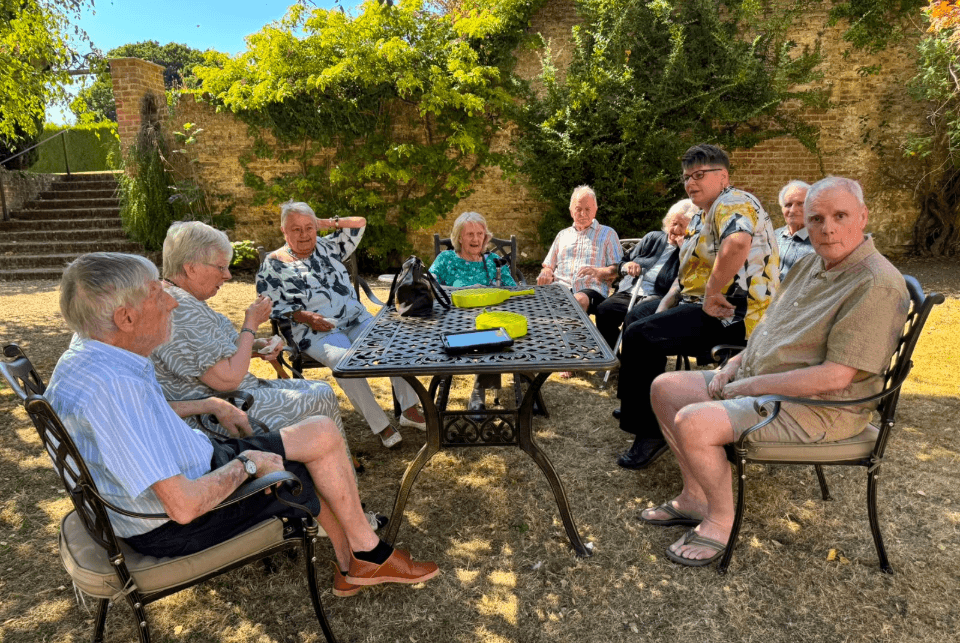
This is the standard we hold ourselves to at Farmhouse and Manor House, our two homes in Kent. It's why mealtimes are flexible rather than fixed sittings, why residents choose whether to spend their morning in the garden or indoors without asking permission, and why we try to build enough time into the day for staff to actually notice what someone wants, not just what's next on the schedule.
Person-centred care is easy to promise. Person-centred living takes commitment, time, people and money. Until providers, commissioners and regulators all recognise that, we'll keep describing services as personalised while quietly expecting people with dementia to fit around the routines, staffing and economics of the organisations caring for them.
For 38 years, I've tried to make personalisation a daily reality rather than a form of words, often on a shoestring, while building services rated Outstanding. In my next piece, I'll go into what we actually changed to make that happen, what we challenged, and why "we haven't got the money" should never be where the conversation ends.

Hale Place Care Solutions
79 Old Road, East Peckham
Tonbridge
Kent
TN12 5EN