



News & Articles
What to Look for When Visiting a Dementia Care Home

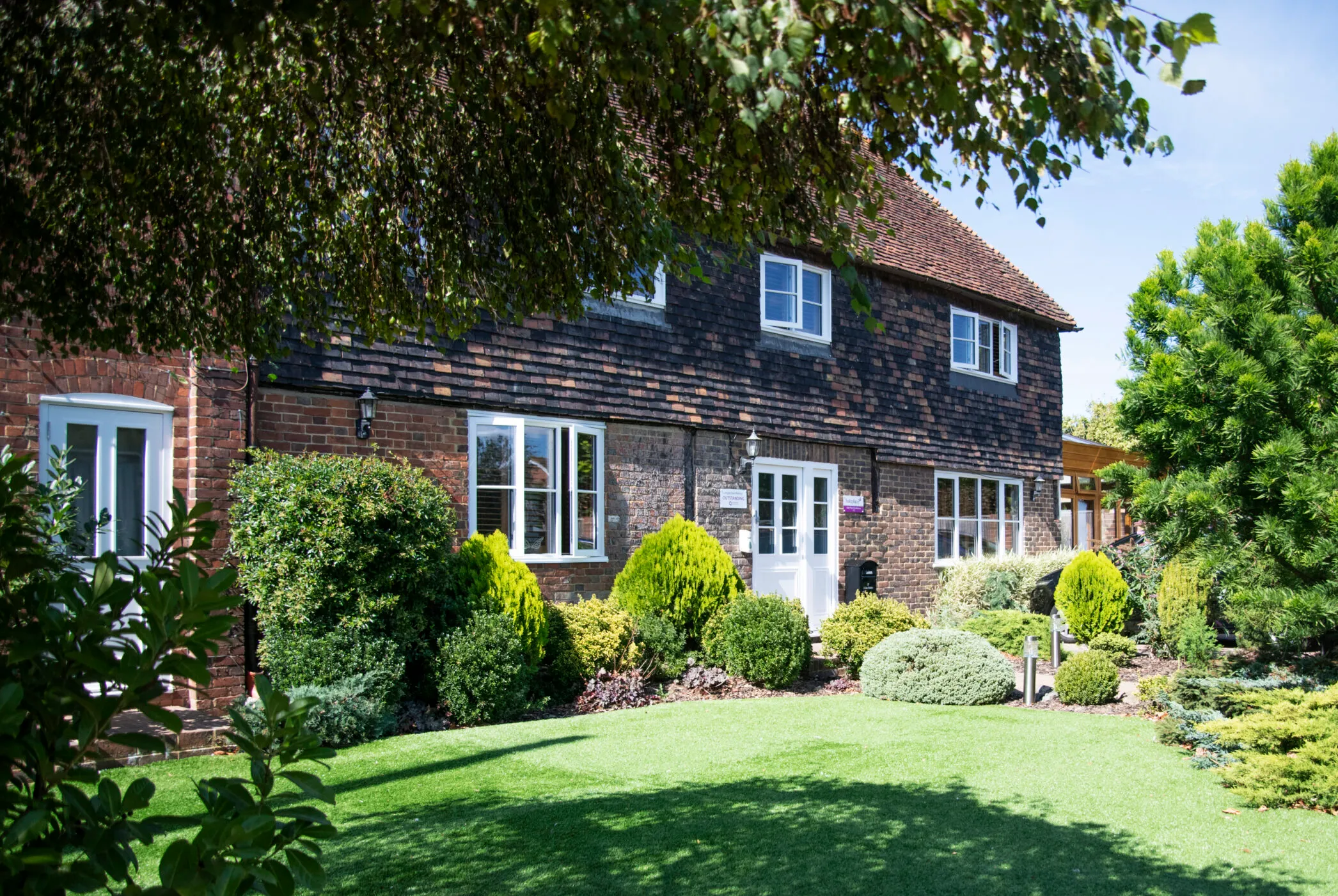
Visiting a care home for the first time can feel overwhelming.
You are trying to make one of the most important decisions of your family's life, often while exhausted and emotionally stretched. It is hard to know what you are actually looking for, and easy to be swayed by things that look impressive on the surface but do not really matter in practice. A freshly painted reception and a glossy brochure tell you very little about the quality of care inside. What matters is harder to see, and you need to know where to look. This guide tells you what genuinely counts when you walk through the door, and the questions most families do not think to ask until it is too late to ask them.
Before You Visit
Do not rely on a single visit to one home. Visit at least two or three, ideally at different times of day. A home that feels calm at 11am on a Tuesday may feel very different at 4pm, when residents are tired and staff are stretched heading toward the evening handover. A second visit, unannounced if the home permits it, will show you far more than a scheduled tour. Before you go, read the most recent CQC inspection report. These are publicly available at cqc.org.uk and are free to access. Do not just look at the headline rating. Read the full report, paying particular attention to the sections on safety, responsiveness and person-centred care. Inspectors record specific observations and these are often far more revealing than the overall score. Also look at how recently the home was inspected. A Good rating from four years ago tells you considerably less than one awarded in the past twelve months.
"We always encourage families to visit us more than once. We want you to see us on a normal day, not a prepared one. If a home discourages repeat visits or is reluctant to accommodate an unannounced call, that tells you something worth paying attention to." — Hale Place
What to Notice the Moment You Walk In
First impressions carry real information. Pay attention to them before anyone has the chance to frame what you are seeing.
The smell. A well-run care home does not smell strongly of urine or heavy cleaning products. Some odour is inevitable in any care environment, but persistent or strong smells point toward inadequate continence care, insufficient staffing, or both. Do not dismiss this observation because it feels unkind to mention. It matters.
The noise level. Is the atmosphere calm or chaotic? Some background activity and noise is healthy and normal. But a home that consistently feels loud, tense or disorganised is worth questioning. Pay attention to whether any distress you hear is being responded to promptly and calmly.
How staff interact with residents. This is the single most important thing you can observe on a visit. Watch what happens when a member of staff passes a resident in a corridor. Do they stop, make eye contact, use the resident's name? Do they crouch down to speak to someone in a wheelchair rather than talking over them? Are interactions warm and unhurried, or functional and task-focused?
The difference between a home where staff genuinely like the people they care for and one where care is delivered mechanically is visible within minutes. Trust what you see.
Whether residents look comfortable. Are people dressed appropriately for the time of day and the weather? Do they appear clean and well-presented? Are those sitting in communal areas engaged with something or someone, or are they lined up facing a television that nobody is watching?
The presence of residents in communal spaces is generally a good sign. But the quality of what is happening in those spaces matters just as much as the fact that people are there.
Questions to Ask About Dementia-Specific Care
Not all care homes are equally equipped for dementia. Some accept residents with a diagnosis but are not genuinely designed around their needs. These questions will help you tell the difference.
What dementia-specific training do staff receive, and how often?
Look for a clear, specific answer rather than a general reassurance about ongoing training. Ask whether all staff receive this training or just senior carers. Ask whether training covers specific approaches such as validation therapy or reminiscence work, and whether it is delivered by an external specialist or in-house. Ask when the most recent training took place.
What is the staff-to-resident ratio, and does this change at night?
Staffing levels matter enormously, and nowhere more so than at night when wandering, disorientation and falls are most likely. Ask for actual figures rather than a reassuring description. The minimum safe ratio for a specialist dementia home at night is generally considered to be one staff member to six residents, but context matters and you should ask how the home determines its levels and whether they adjust for residents with higher needs.
How do you manage sundowning and periods of acute distress?
Sundowning, the marked increase in confusion, agitation and anxiety that many people with dementia experience in the late afternoon and early evening, is one of the most challenging aspects of dementia care. A home with genuine expertise will have a clear, considered and specific approach. They should be able to tell you how the environment is managed at this time of day, how staff are deployed, and what non-pharmacological strategies they use before turning to medication.
If the answer is vague, or if medication is the first tool mentioned rather than the last resort, treat that as a significant concern.
How do you approach behaviour that is challenging to manage?
People with dementia sometimes express distress through behaviour that is difficult to manage: aggression, shouting, repeated questioning, resistance to personal care. How a home responds to this reflects its entire philosophy of care. The answer you want to hear is one built on understanding the cause of the behaviour and addressing it, not one centred on containment or sedation.
How do you get to know a new resident before they arrive?
Person-centred dementia care is not possible without detailed knowledge of who someone is. Ask how the home gathers information about a new resident's life history, preferences, routines, meaningful relationships and important memories. Ask whether this information is gathered through a formal assessment, a family meeting, or both. Ask how it is shared across the whole care team, including night staff, kitchen staff and activity coordinators.
A home that takes this seriously will have a system for it. A home that does not will struggle to answer the question clearly.
How is the physical environment designed for dementia?
Dementia affects spatial awareness, memory and the ability to interpret visual information. A well-designed dementia environment compensates for these difficulties rather than adding to them. Look for colour-coded corridors and door frames to help residents find their way, clear and consistent signage at eye level, access to a safe and enclosed outdoor space, good natural lighting throughout, and individual rooms that residents and families can personalise with familiar belongings and photographs.
Ask specifically about outdoor access. The ability to go outside safely, to sit in a garden, to feel fresh air and natural light, has a meaningful impact on wellbeing for people with dementia. Not every home can offer this, but it is worth asking.
Questions to Ask About Day-to-Day Life
Can I see a typical week's activity programme?
Look beyond the list of activities to how they are structured and who they are designed for. A meaningful activity programme for a dementia care home should cater to different stages of dementia and different personal interests. It should include both group and one-to-one activities. It should reflect the life histories of the people living there, not a generic schedule applied to every resident.
Ask how activities are adapted for residents who can no longer participate in group settings, and ask what happens on days when organised activities are not running.
What does a typical day look like for a resident with dementia?
Ask for a genuine, detailed description rather than a polished summary. When do residents wake up, and is this flexible or fixed? Are mealtimes social and unhurried, or are they efficiently managed and quickly cleared? How much time do residents spend in their own rooms versus communal areas? What happens in the evenings? Is there flexibility built into the day, or is the routine primarily shaped around the needs of the staff rota?
How are meals handled for residents who struggle with eating?
This is an area families often overlook, but it becomes critically important as dementia progresses. Appetite changes, swallowing difficulties, and the loss of the ability to use cutlery are all common. Ask whether meals are adapted in texture and presentation for residents who need it, whether staff sit with residents who need support to eat, whether mealtimes are treated as a social event or a task to be completed, and whether individual food preferences and dietary needs are consistently catered for.
Also ask what happens if a resident refuses to eat. Persistent refusal to eat is common in advanced dementia and how a home manages it reflects both the quality of its care and the depth of its knowledge.
"Food matters far more than people realise when they are first visiting homes. It is not just about nutrition. A meal eaten at a proper table, with familiar food and people around you, is one of the most normalising and comforting parts of a day. We take it seriously, and we think any home worth choosing should be able to tell you exactly how." — Hale Place
Questions to Ask About Family Involvement
How do you communicate with families on a day-to-day basis?
Ask whether updates are reactive, meaning you hear when something goes wrong, or proactive, meaning you are kept informed as a matter of course. Ask whether there is a named key worker for your loved one and whether that person is the consistent point of contact for your family. Ask how handovers between staff work and whether information about a resident's day is reliably passed between shifts.
How are concerns raised and resolved?
Every care home will tell you they welcome feedback. Ask what the actual process is. Is there a formal complaints procedure? How quickly are concerns acknowledged? What happens if a concern is not resolved to your satisfaction? Ask whether the home has ever received a formal complaint and, if so, how it was handled. A home that has never received a complaint is not necessarily a better home than one that has. What matters is whether complaints are taken seriously and resolved properly.
Are families involved in care planning?
You should be invited to contribute to and review your loved one's care plan on a regular basis, not just at the point of admission. Ask how often care plans are formally reviewed and whether families are included in those reviews as a matter of course. Ask whether the home has a family liaison role and how families are kept informed when care needs change.
If family involvement in care planning is not standard practice, treat it as a significant concern.
What a Good Visit Feels Like
Beyond the specific answers you receive, pay attention to the overall feeling of a visit. Do staff seem settled and content in their work? High morale and low staff turnover are among the strongest indicators of a well-run home. People who have worked somewhere for a long time, and who clearly enjoy it, provide a consistency of care that is impossible to replicate with a revolving door of agency staff. Did the manager answer your questions directly, or did they deflect toward reassuring generalities? Did you feel genuinely welcomed, or efficiently processed? Were you given time and space, or did the visit feel like it was being steered toward a brochure conclusion? If possible, speak to the families of existing residents. Ask the home whether this is something they can facilitate. A home that is proud of its care will welcome the opportunity. And trust your instincts. If something feels off, it probably is. You are not imagining things. If a home genuinely impresses you, that impression is worth trusting too. You know what you are looking for. A visit is your opportunity to find it.
"We never mind the difficult questions. In fact, we welcome them. A family that asks hard questions is a family that cares, and those are exactly the families we want to work with. If we cannot answer something clearly, that is as useful for us to know as it is for you." — Hale Place
Visiting Hale Place
We welcome families at any stage of the process, whether you are just beginning to look around or are close to making a decision. We offer relaxed, unhurried visits with no sales process and no pressure. You are welcome to bring your loved one along, and we are happy to answer any questions you have before, during or after your visit.

Hale Place Care Solutions
79 Old Road, East Peckham
Tonbridge
Kent
TN12 5EN