



News & Articles
The Role of Gardens and Outdoor Space in Dementia Care

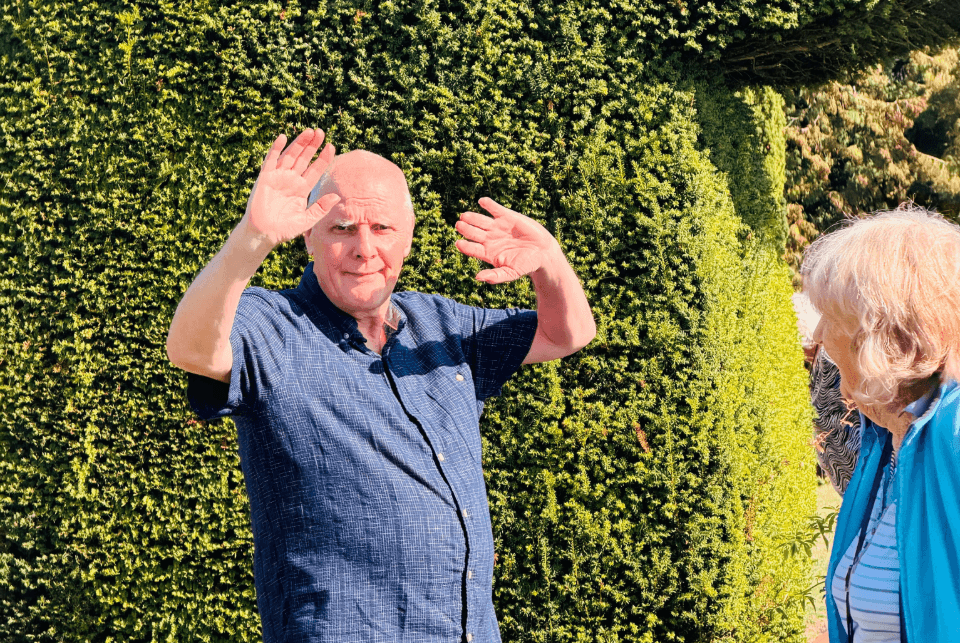
Ask families what surprised them most on their first visit to Farmhouse and a lot of them say the garden. It's bigger than they expect, and, more to the point, people are actually in it. That isn't a nice extra. For someone living with dementia, time outdoors is one of the simplest and most effective parts of a good day.
Why outdoor space matters so much
Dementia can make the world feel confusing and over-demanding. A well-designed garden does the opposite. It's calm, it asks very little of a person, and it gives them something that indoor spaces often can't: freedom to move without being told where to go.
The Alzheimer's Society highlights several of the ways gardens help, and they line up closely with what we see day to day:
Freedom is the point
There's a difference between a garden people can see and a garden people can use. Many homes have the first. Fewer have the second, because letting someone wander outdoors takes more thought than keeping them inside.
At Farmhouse and Manor House, we've deliberately gone the other way. If someone wants to step outside, we help them do it safely rather than keeping them in because it's simpler for us. A single-storey layout and a garden with space to roam means a resident can choose to be outdoors without a negotiation, whether that's a walk, a seat in the sun, or lunch with the doors open.
The Hale Place team put it this way:
"Restriction is easy to build into a care home and hard to take out again. We'd rather do the harder thing. If someone wants to be outside, our job is to make that safe, not to talk them out of it."
What time outdoors does for a day
The effects tend to show up across the whole day rather than in one moment:
Better evenings. Daylight and gentle movement earlier in the day support a healthier sleep and wake pattern, which can make the late afternoon and evening calmer. If you've noticed that someone becomes restless as the light fades, our guide to understanding sundowning goes into this in more detail.
More appetite and energy. Fresh air and a short walk do what they do for the rest of us. Meals often go better after some time outside.
More connection. A garden is an easier place to talk than a lounge. People sit side by side, look at the same flowerbed, and conversation comes more naturally than it does across a table.
Less agitation. Having somewhere to go, and being free to go there, takes the pressure off. Restlessness often has an outlet when there's a safe place to walk it off.
Making the most of a garden through the seasons
A garden isn't only for summer afternoons. Wrapped up in a coat and hat, a short walk on a crisp day is just as valuable, and each season brings something different to notice: bulbs in spring, the smell of cut grass, fallen leaves to crunch through, frost on a branch. Seasonal change also helps people keep a sense of time passing, which can be hard to hold onto indoors where every day looks the same.
Families can be part of this too. Visiting is often easier outside, where there's something to look at together and no pressure to fill a silence. Bringing a favourite plant, planting a pot together or simply sitting in the sun with a cup of tea can make a visit feel natural and unhurried.
Looking after safety without taking away freedom
A good dementia garden is designed so that freedom and safety work together rather than against each other. That means secure boundaries that blend into the planting rather than looking like a fence, level paths, shade and seating for rest, and staff who are nearby without hovering. The aim is for a person to feel free, and to be safe, at the same time.
What to look for in any care home garden
Whether you're visiting Farmhouse or anywhere else, it's worth looking at the garden properly rather than just glancing at it through a window:
- Can residents get into it on their own, or only when staff open a door?
- Are the paths firm, level and well lit, ideally looping rather than ending in a dead end?
- Is there somewhere to sit, in both sun and shade?
- Is it planted for the senses, with scent, texture and movement, not just lawn?
- Does it look used? Worn paths, a watering can left out and a few chairs not quite in line are good signs.
Our guide on choosing a dementia care home has more on what to check when you visit.
Seeing it for yourself
Reading about a garden only gets you so far. If you'd like to see ours, and how it's used on an ordinary day, get in touch and we'll show you round. You can also read more about what we offer on our dementia care page.

Hale Place Care Solutions
79 Old Road, East Peckham
Tonbridge
Kent
TN12 5EN