



News & Articles
Why Smaller Dementia Care Homes Like Farmhouse and Manor House Often Mean Better Care

Why Smaller Care Homes Like Farmhouse Often Mean Better Care
Size is one of the first things families notice about a care home and one of the last things they think to ask about. A building with eighty beds and a building with eleven can both be rated Good, both have a friendly manager, and both look lovely on a tour. But living in them is very different, and for someone with dementia that difference matters a great deal.
We should be upfront: smaller doesn't automatically mean better, and we'll come back to that. But there are real reasons small homes like Farmhouse and Manor House often do dementia care well, and they're worth understanding before you compare homes.
Eleven rooms changes everything
Farmhouse is a single-storey home with eleven rooms, nine single and two companion rooms. That number shapes almost everything about daily life here.
None of this is a criticism of large homes, many of which are run by dedicated people. It simply reflects what happens to a day when there are fewer people in the building.
Why this matters more with dementia
Dementia makes unfamiliarity harder to cope with. New faces, unfamiliar layouts and busy, noisy spaces can be unsettling, and people living with dementia often settle better in calm, familiar surroundings with a small number of people they come to recognise.
There's some research behind this, though it's worth being honest about how far it goes. A Dutch controlled study of residents with moderate to severe dementia compared people who stayed in large special care units with those who moved to small-scale, homelike units of seven or eight residents. Those who moved showed significantly less anxious behaviour over time, although the study found no significant difference on the other measures of quality of life, and the authors noted some limitations in how it was run. In other words, the evidence points in the right direction, but it's modest, and it isn't a guarantee.
That honesty matters to us. A home's size is one factor among several, and a small home that isn't well run won't beat a large one that is.
What small really changes in practice
Staff who know you. In a home of eleven, a carer isn't looking after a number on a rota. They know that one resident likes the curtains left open, another needs a warm drink before bed, and a third gets anxious when the television is on. That knowledge is what lets staff spot small changes early, often before a family would notice anything.
Continuity. Fewer staff, working together over years, means the same faces. Danielle Cave has managed Farmhouse since 2009, and that kind of continuity is easier to sustain in a small team where people feel they belong.
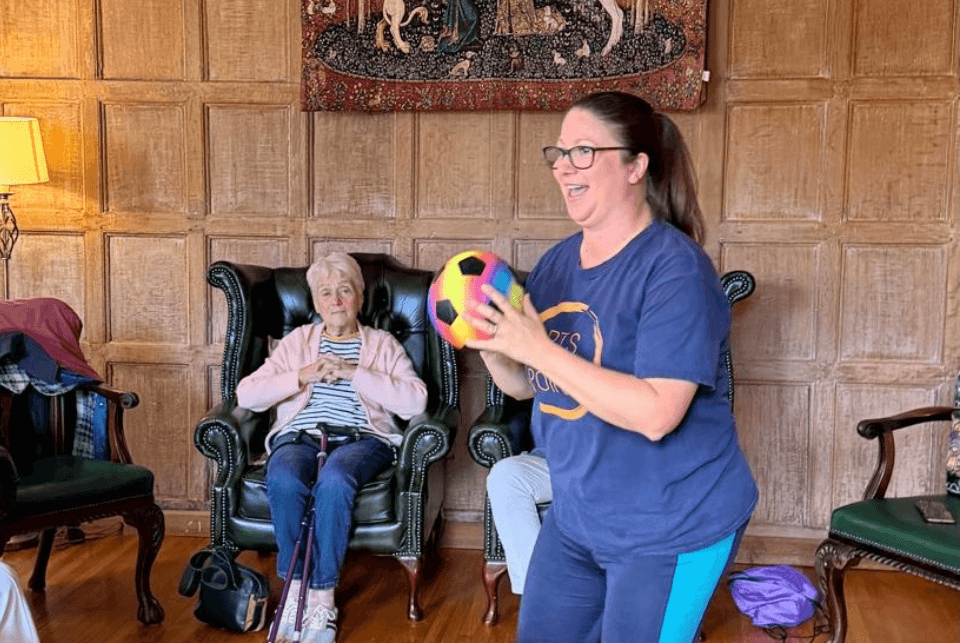
A home feel, not a facility feel. It's hard to make a large building feel like a house. A small one can. Residents have their own rooms furnished with their own things, a lounge that feels like a lounge, and a kitchen and garden that are part of daily life, not features to look at.
Open conversations. In a small home, there's no distance between you and the people who care for your relative. Any member of staff, not just the manager, should be able to tell you honestly how things are going.
Danielle Cave, Our Home Manage put it this way...
"In a home this size, there's nowhere for anything to hide, and that's a good thing. If a resident's having a harder week, we all know. If something's working, we all know that too. It keeps everyone honest and it keeps everyone close."
Where larger homes have the edge
It would be one-sided to pretend small homes win on everything. Larger homes can offer a wider range of facilities, more flexibility with staffing cover, and sometimes lower fees through economies of scale. A larger home with strong leadership, settled staff and a genuinely person-centred approach can provide excellent care.
The thing to look for isn't size on its own. It's whether a home can still feel personal at the size it is. A few questions help:
- How many people will know my relative well, not just by name?
- How often do staff move between units or change?
- Does the home feel quiet and settled, or busy and transient?
- Can I see how residents spend an ordinary day, not just the planned activities?
Our guide to what to look for when choosing a dementia care home covers more of what to ask.
A family business
Hale Place has been providing dementia care since 1988, and it's part of a small, family-run group rather than a large corporate chain. That affects how decisions get made, quicker, closer to the people involved, and with the people at the top paying attention to what happens on the floor. You can read more about how that culture came about on out about us page.
Come and see for yourself
Whatever the research says, the clearest way to tell whether a home is right for someone you love is to spend time in it. Get in touch and we'll arrange a visit at a time that suits you. Come at different times of day if you can, and see how a small home feels when it isn't putting on a show.

Hale Place Care Solutions
79 Old Road, East Peckham
Tonbridge
Kent
TN12 5EN